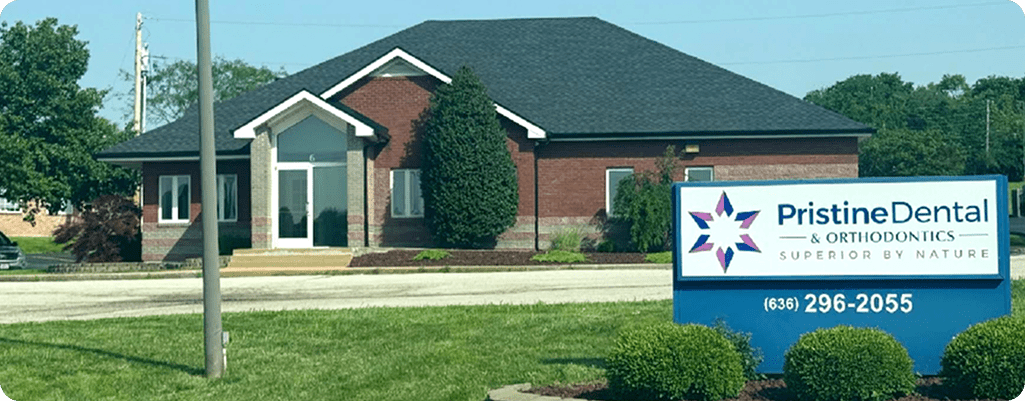
Welcome to Pristine Dental and Orthodontics, Arnold, MO
Dentist in Arnold, MO
Creating Beautiful Smiles with Skill and Softness
At Pristine Dental and Orthodontics, we focus on individualized care to build confident smiles and enhance oral health. Patients relax in our cutting-edge, modern facility that is designed to be stress-free and comfortable, regardless of age. From normal check-ups to cosmetic and orthodontic treatments, our team is kind and effective, working around your needs.
In Arnold MO we believe in giving people the kind of care that is just right for them. Our goal is to make sure everyone feels comfortable and confident when they come to see us. We want to help people have oral health that lasts a long time.
Our expert team possesses superb clinical skills, coupled with a gentle and patient disposition, guaranteeing the comfort and satisfaction of our patients during every visit. We provide our patients with the entire array of dental services from preventive and maintenance care, all the way to the most advanced and innovative dental and orthodontic solutions, to help them attain long-lasting, happy smiles.
Find a dentist
Find a dentist
Dr. Senthil N. Arun
Orthodontist
Dr. Senthil Arun is a well qualified and trained Orthodontist practicing dentistry for more than 20 years. He has established himself committing to years of dedicated education and clinical training required to set highest standards for clinical practice of dentistry with focus on Orthodontics.
Dr. Arun hails from India and he earned a degree in Bachelor of Dental Surgery (BDS) from Ragas Dental College, Chennai, India. He excelled in his class and won several awards while in dental school. Upon moving to the United States, Dr. Arun received his Doctor of Philosophy (PhD) degree with distinction from Medical College of Georgia (now known as Augusta University) in Augusta, GA. To further his education and knowledge, he graduated with high honors from the University of Pennsylvania School of Dental Medicine with a Doctor of Dental Medicine (DMD) degree. He also completed a specialized post-graduate certification in orthodontics as well as earned a Master of Science (MSD) degree from the University of Louisville School of Dentistry.
Find a dentist
Dr. Melissa Olvera
General Dentist
Dr. Melissa Selene Olvera, DDS is a general dentist with over 15 years of experience in both clinical and hospital settings. She earned her Doctor of Dental Surgery from the University of Missouri–Kansas City School of Dentistry in 2009, where she served as class president. She also holds degrees in Biology and Chemistry from UMKC’s School of Biological Sciences.
With more than 1,500 hours of operating room experience, Dr. Olvera is skilled in complex dental procedures and hospital dentistry. Her work has been published in the American Medical Journal of Otolaryngology, and for nearly two decades, she has volunteered in Guatemala and Honduras, providing care in underserved villages.
Dr. Olvera takes particular pride in helping patients who are afraid of the dentist, turning fear into trust through empathy, patience, and clear communication. She believes a positive dental experience can change the way people care for their health long term. Outside the office, she’s a devoted mom to her six-year-old daughter. They love drawing, painting, and crafting together—activities that reflect the same creativity and
care she brings to her practice.
Find a dentist
Dr. Humaira Rosinski
General Dentist
Dr. R grew up in Karachi Pakistan, she attended St. Joseph's College for undergraduate studies and Baqai Medical School for her Dental Doctorate of Surgery. She moved to the United States and graduated from New York University dental school and completed her residency at Yale University School of Medicine. Next Dr. R joined the United States Air Force. She served as a dentist, translator, and community builder while stationed home and during her deployment to the Gulf. Upon completion of her commission she moved to St. Louis to raise her family. She has been an actively practicing dentist since 1995. She has received multiple awards and accommodations internationally.
She has been happily married since 2008, has 2 daughter's, 2 cats, likes to exercise and loves to travel.
Find a dentist
Dr. Scott Delaplain
General Dentist
Dr. J. Scott Delaplain is a general dentist based in Arnold, Missouri, with over 33 years of experience in the field. He earned his Bachelor of Arts from St. Mary's University of Minnesota
in 1987 and his Doctor of Dental Surgery (DDS) from Loyola University of Chicago School of Dentistry in 1991.
In the fall of 1991, Dr. Delaplain began practicing dentistry in Arnold, where he continues to serve the community through Matrix Dental Group which is now Pristine Dental and Orthodontics. He offers a comprehensive range of dental services from fillings, extractions to cosmetic dentistry to his patients.
Dr. Delaplain is originally from the St. Louis area. In his spare time, he enjoys golf, traveling, and home remodeling projects. He and his wife have two daughters.
Laura Quinn
Registered Dental Hygienist
Laura Quinn has been a registered dental hygienist for 26 years. Laura...
Laura Quinn has been a registered dental hygienist for 26 years. Laura graduated from St Louis Community College – Forest Park in 1999.
Throughout Laura’s career she gained experience working with many doctors and has created friendships with long term patients. Laura is most passionate about patient comfort and listening to patient’s needs and concerns.
Laura has lived in Jefferson County for 45 years. She has two grown daughters that she is very proud of as they go forth on their personal journey. In her free time, she enjoys completing home improvement projects, watching reality TV, listening to music and shopping.
Aarti Arun
Registered Dental Hygienist
Welcome to our office. My name is Aarti Arun and I hold...
Welcome to our office. My name is Aarti Arun and I hold the position of a dental hygienist, I also oversee the operations for the smooth functioning of our dental and orthodontics office.
I have a Bachelors of Engineering degree in Electronica and Communication Engineering (B.E ECE) from University of Madras, India. I obtained by Dental Hygiene license with education from the dental hygiene associate in applied science (AAS) program at St Louis Community College, Forest Park. I have 9 years of dental hygienist work experience from periodontist and general dentistry offices. Assuring patient care is my work motto.
My supportive family includes my husband Dr. Senthil Arun, our boys – Tejas Arun and Shreyas Arun and our parents. Workout and travel are my hobbies.
I am very excited to be your dental hygienist and we as a team are certain to provide exceptional dental and orthodontic care to all our valuable families of Pristine Dental and Orthodontics.
We look forward to meet you at your next dental appointment.
Elaine Akamatu
Registered Dental Hygienist
Elaine Akamatu is an enthusiastic dental hygienist with many years of experience...
Elaine Akamatu is an enthusiastic dental hygienist with many years of experience providing integrated oral healthcare services. She has been passionate about dentistry since she began her career as a Dentist- Degree in Bachelor of Dental Surgery (BDS) from Unaerp Center at Ribeirão Preto University, Brazil, in 1998. In 2000, she also completed a specialized post-graduate certification in Endodontic. She moved to St. Louis in 2007 following her husband job relocation. She obtained her Dental Hygiene license from the dental hygiene associate in applied science (AAS) program at Missouri College in 2013 with high honors.
Elaine’s top priority is helping each patient achieve optimal oral health through personalized care and education on proper home-care strategies. Through the years, her patients feedback often mention that she make their appointments at ease. Elaine is proud of making patients to feel at ease, building confidence, trust, and friendship with each patient. Elaine is dedicated to continuing education, ensuring she provides the most current and best possible care to her community. She likes Yoga, travels, and she enjoys spending time with family and friends, and with her dog Gucci.
Our Services
Arnold Dentistry Services
At Pristine Dental and Orthodontics we want you to feel comfortable and confident with your smile. A healthy smile is really important for your happiness. We care about your term oral health. We believe that when you have a smile you feel more self-assured. Our goal is to help you achieve that.
General Dentistry
Dental Crown
Implant Dentistry
Restorative Dentistry
Emergency Dental Care
Why You Need to See a Dentist Regularly
Routine dental visits play a big role in protecting your smile and your health. Even if your teeth feel fine, many dental problems develop without noticeable symptoms. Visiting Pristine Dental and Orthodontics in Arnold, MO on a regular basis helps you stay ahead of potential issues and maintain long-term oral health.
1- Check For Cavities
During your dental visit, the dentist thoroughly examines your teeth to find early signs of cavities. Treating cavities early prevents further decay and preserves your natural teeth.
2- Periodontal Disease
Gum disease often develops quietly and can cause serious damage if not treated. Regular checkups help detect inflammation or infection early, allowing timely treatment to protect your gums and bone.
3- Oral Cancer Screenings
Oral cancer screenings are a vital part of your dental exam. Detecting abnormalities or suspicious spots early can save lives through prompt diagnosis and treatment.
4- Dental Cleanings
Professional cleanings remove plaque and hardened tartar that daily brushing can’t reach. This helps prevent decay and keeps your teeth looking bright and polished.
5- Overall Health
Your oral health is connected to your overall well-being. Untreated dental issues can increase risks for conditions like heart disease and diabetes, so regular dental care supports your entire body’s health.
Fast, Lifelike CAD/CAM Dentistry
Advanced dental technology known as Computer-Aided Design and Computer-Aided Manufacturing (CAD/CAM) allows us to create beautiful, laboratory-quality crowns and restorations in a single visit. Instead of waiting weeks and returning for multiple appointments, you can leave our office the same day with a fully restored tooth.
This innovative technology uses precise digital imaging and on-site milling to craft restorations that are both durable and incredibly natural-looking. Studies show that CAD/CAM restorations are just as strong and successful as traditional crowns — with the added convenience of same-day treatment.
Best of all, your new crown is designed to blend seamlessly with your smile, so it looks and feels just like a natural tooth.
How It Works
The process of placing a crown begins the same way whether you choose a traditional crown or a same-day crown. First, the tooth is carefully prepared by removing any decay and gently shaping it so the crown will fit securely and comfortably. That’s where the similarities end.
With a traditional crown, the next step involves taking a physical impression using a putty-like material. That mold is then sent to a dental lab, where your crown is custom-made — a process that can take weeks and usually requires a temporary crown in the meantime.
With a same-day CAD/CAM crown, everything happens right here in our office. Instead of messy impressions, we use advanced digital scanning technology to capture detailed images of your tooth. In just minutes, the computer creates an extremely precise 3D model of your smile.
From there, your custom crown is designed digitally and milled from a high-quality ceramic block — all while you relax. Once ready, it’s bonded securely into place, restoring your tooth’s strength, function, and natural appearance in a single visit.
Caring for Your Same-Day Crown
Your same-day crown is designed to look, feel, and function just like a natural tooth — and it should be cared for the same way. Brush twice a day, floss daily, and keep all your teeth — restored and natural — clean to prevent plaque buildup and protect your oral health.
Routine dental checkups and professional cleanings are especially important when you have a crown. Regular visits allow us to monitor your restoration and ensure everything stays healthy and secure.
To protect your crown, avoid using your teeth as tools to open packages or bite hard objects like ice. If you grind or clench your teeth, a custom nightguard can help prevent unnecessary wear and extend the life of your restoration.
With proper care, your same-day crown can provide strength, beauty, and reliable function for many years to come.
The Most Advanced Solution for Missing Teeth
When it comes to replacing missing teeth, dental implants are widely considered the gold standard in modern dentistry. No other tooth-replacement option offers the same level of durability, stability, and long-term success.
Unlike traditional bridges or dentures, dental implants do more than restore your smile — they help preserve the jawbone. When a tooth is lost, the underlying bone begins to deteriorate over time. This bone loss is one of the most significant hidden consequences of missing teeth. Because implants replace the root of the tooth, they stimulate and maintain healthy bone, helping protect your facial structure and oral health.
A dental implant is a small, biocompatible titanium post that is gently placed into the jawbone to serve as a replacement tooth root. The procedure is typically straightforward and performed using local anesthesia, making it more comfortable than many patients expect.
After a healing period that allows the implant to integrate securely with the bone, a custom-crafted crown is attached. The result is a restoration that looks, feels, and functions just like a natural tooth.
With a documented success rate of over 95%, dental implants offer a reliable, long-lasting solution that can enhance your smile and quality of life for many years to come.
How Dental Implants Work
During a minor in-office procedure at our St. Ann practice, a small titanium implant is precisely placed into the jawbone where your tooth is missing. The procedure is typically completed with local anesthesia and is more comfortable than many patients expect.
Over the next few months, the implant undergoes a natural process called osseointegration, where it fuses securely with the surrounding bone. This integration creates a strong, stable foundation — just like a natural tooth root.
Once healing is complete, a custom-designed crown is attached to the implant, restoring the appearance, strength, and function of your smile with a result that looks and feels completely natural.
Tooth Replacement Options Using Dental Implants
Dental implants can support a full arch of upper or lower teeth that are fixed securely in place and never need to be removed. In many cases, a complete set of teeth can be supported by as few as four implants — similar to how four legs can support a table.
Depending on your jawbone density and volume, five or six implants may be recommended to provide optimal strength and stability for a full arch of 10 to 12 teeth.
Implant-supported teeth feel natural, won’t slip or shift, and help preserve your jawbone by stimulating it just like natural tooth roots. With proper care, they are designed to provide a long-lasting, potentially lifetime solution.
Support Removable Dentures
Implants can also dramatically improve the comfort and stability of removable dentures.
Traditional dentures rest directly on the gums, placing pressure on the surface of the jawbone. Over time, this can accelerate bone loss, causing the jaw to shrink and dentures — especially lower dentures — to loosen and slip.
By attaching a denture to strategically placed implants, that pressure is redirected into the jawbone itself rather than the surface. This provides greater stability when eating and speaking, reduces slipping, and helps preserve the bone beneath the denture for better long-term oral health.
Implant Care and Maintenance
Once a dental implant has fully fused with the jawbone, its success rate is extremely high. In fact, there are only two primary reasons an implant may fail after successful integration: infection caused by poor oral hygiene or excessive biting forces.
Poor home care and missed professional cleanings can lead to a condition called peri-implantitis — a bacterial infection that affects the tissue and bone surrounding the implant. The good news is that this condition is largely preventable. Brushing and flossing daily, along with maintaining regular dental checkups and cleanings, will help keep your implants healthy and secure.
Excessive biting forces can also compromise an implant. These forces may result from chronic clenching or grinding (bruxism) or from placing too much pressure on too few implants. Proper treatment planning ensures the correct number of implants are placed to evenly support your bite.
If you grind or clench your teeth, we may recommend a custom nightguard to protect both your implants and your natural teeth from unnecessary stress.
Dental implants are a long-term investment in your smile, your oral health, and your overall well-being. With proper care and protection, they are designed to serve you reliably for many years to come.
Gum Emergencies
The soft tissues of your mouth — including your gums, tongue, and inner cheeks — are delicate and can be easily injured by accidental bites, sports impacts, or hot foods and drinks.
If you experience a soft tissue injury:
Rinse your mouth gently with warm salt water.
Carefully remove any visible debris.
Control bleeding by applying a clean, damp cloth or gauze to the area for 10–15 minutes.
Seek immediate professional care if you notice:
A gum abscess (a pus-filled pocket caused by infection).
An object lodged in the gums that cannot be safely removed.
Bleeding that does not stop after 10–15 minutes.
These situations require prompt attention to prevent complications and ensure proper healing.
Building Lifelong Oral Health Through Prevention
Our program is designed to help prevent new cavities, preserve restored teeth, and manage periodontal (gum) health. At your initial visit, oral hygiene instructions are reviewed and reinforced at each recall appointment. The following recommendations can help you maintain a healthy smile:
Brush your teeth twice a day using a soft-bristled toothbrush in gentle circular motions along the gum line.
Floss every night with a U-shaped motion, keeping the floss against each tooth surface to remove plaque between teeth.
Avoid smoking, which can damage your gums and overall oral health.
Limit sticky or sugary foods to reduce the risk of cavities.
Eat a balanced diet rich in vitamins and minerals to support strong teeth and gums.
Use antiseptic or fluoride rinses as directed to help protect teeth and fight bacteria.
Consider sealants on young permanent teeth to prevent decay in hard-to-reach areas.
Gum Emergencies
The soft tissues of your mouth — including your gums, tongue, and inner cheeks — are delicate and can be easily injured by accidental bites, sports impacts, or hot foods and drinks.
If you experience a soft tissue injury:
Rinse your mouth gently with warm salt water.
Carefully remove any visible debris.
Control bleeding by applying a clean, damp cloth or gauze to the area for 10–15 minutes.
Seek immediate professional care if you notice:
A gum abscess (a pus-filled pocket caused by infection).
An object lodged in the gums that cannot be safely removed.
Bleeding that does not stop after 10–15 minutes.
These situations require prompt attention to prevent complications and ensure proper healing.
Orthodontic Emergencies
If you experience severe pain or encounter a problem with your orthodontic appliances that cannot be safely managed at home, contact your orthodontist immediately. Ignoring pain or damaged equipment can delay your treatment and affect your overall results.
Fortunately, many minor orthodontic emergencies can be temporarily managed at home until you can be seen by your orthodontist.
Tooth Pain
Pain is a signal that something is wrong. Any tooth discomfort should be taken seriously, as ignoring it can lead to more serious dental or medical complications.
Common causes of tooth pain include:
Tooth decay
Enamel erosion
Infection or abscess
Trauma or injury
Traumatic Dental Injuries
Traumatic dental injuries are most common in children and teenagers, but people of all ages can experience them. These injuries often result from sports accidents, car collisions, or falls and trips.
If you experience a traumatic dental injury, it’s important to see your dentist as soon as possible. Prompt attention can prevent the injury from worsening. A professional dental exam is the only way to accurately assess the extent of the damage, including any impact to surrounding teeth or tissues.
General Dentistry
Why You Need to See a Dentist Regularly
Routine dental visits play a big role in protecting your smile and your health. Even if your teeth feel fine, many dental problems develop without noticeable symptoms. Visiting Pristine Dental and Orthodontics in Arnold, MO on a regular basis helps you stay ahead of potential issues and maintain long-term oral health.
1- Check For Cavities
During your dental visit, the dentist thoroughly examines your teeth to find early signs of cavities. Treating cavities early prevents further decay and preserves your natural teeth.
2- Periodontal Disease
Gum disease often develops quietly and can cause serious damage if not treated. Regular checkups help detect inflammation or infection early, allowing timely treatment to protect your gums and bone.
3- Oral Cancer Screenings
Oral cancer screenings are a vital part of your dental exam. Detecting abnormalities or suspicious spots early can save lives through prompt diagnosis and treatment.
4- Dental Cleanings
Professional cleanings remove plaque and hardened tartar that daily brushing can’t reach. This helps prevent decay and keeps your teeth looking bright and polished.
5- Overall Health
Your oral health is connected to your overall well-being. Untreated dental issues can increase risks for conditions like heart disease and diabetes, so regular dental care supports your entire body’s health.
Dental Crown
Fast, Lifelike CAD/CAM Dentistry
Advanced dental technology known as Computer-Aided Design and Computer-Aided Manufacturing (CAD/CAM) allows us to create beautiful, laboratory-quality crowns and restorations in a single visit. Instead of waiting weeks and returning for multiple appointments, you can leave our office the same day with a fully restored tooth.
This innovative technology uses precise digital imaging and on-site milling to craft restorations that are both durable and incredibly natural-looking. Studies show that CAD/CAM restorations are just as strong and successful as traditional crowns — with the added convenience of same-day treatment.
Best of all, your new crown is designed to blend seamlessly with your smile, so it looks and feels just like a natural tooth.
How It Works
The process of placing a crown begins the same way whether you choose a traditional crown or a same-day crown. First, the tooth is carefully prepared by removing any decay and gently shaping it so the crown will fit securely and comfortably. That’s where the similarities end.
With a traditional crown, the next step involves taking a physical impression using a putty-like material. That mold is then sent to a dental lab, where your crown is custom-made — a process that can take weeks and usually requires a temporary crown in the meantime.
With a same-day CAD/CAM crown, everything happens right here in our office. Instead of messy impressions, we use advanced digital scanning technology to capture detailed images of your tooth. In just minutes, the computer creates an extremely precise 3D model of your smile.
From there, your custom crown is designed digitally and milled from a high-quality ceramic block — all while you relax. Once ready, it’s bonded securely into place, restoring your tooth’s strength, function, and natural appearance in a single visit.
Caring for Your Same-Day Crown
Your same-day crown is designed to look, feel, and function just like a natural tooth — and it should be cared for the same way. Brush twice a day, floss daily, and keep all your teeth — restored and natural — clean to prevent plaque buildup and protect your oral health.
Routine dental checkups and professional cleanings are especially important when you have a crown. Regular visits allow us to monitor your restoration and ensure everything stays healthy and secure.
To protect your crown, avoid using your teeth as tools to open packages or bite hard objects like ice. If you grind or clench your teeth, a custom nightguard can help prevent unnecessary wear and extend the life of your restoration.
With proper care, your same-day crown can provide strength, beauty, and reliable function for many years to come.
Implant Dentistry
The Most Advanced Solution for Missing Teeth
When it comes to replacing missing teeth, dental implants are widely considered the gold standard in modern dentistry. No other tooth-replacement option offers the same level of durability, stability, and long-term success.
Unlike traditional bridges or dentures, dental implants do more than restore your smile — they help preserve the jawbone. When a tooth is lost, the underlying bone begins to deteriorate over time. This bone loss is one of the most significant hidden consequences of missing teeth. Because implants replace the root of the tooth, they stimulate and maintain healthy bone, helping protect your facial structure and oral health.
A dental implant is a small, biocompatible titanium post that is gently placed into the jawbone to serve as a replacement tooth root. The procedure is typically straightforward and performed using local anesthesia, making it more comfortable than many patients expect.
After a healing period that allows the implant to integrate securely with the bone, a custom-crafted crown is attached. The result is a restoration that looks, feels, and functions just like a natural tooth.
With a documented success rate of over 95%, dental implants offer a reliable, long-lasting solution that can enhance your smile and quality of life for many years to come.
How Dental Implants Work
During a minor in-office procedure at our St. Ann practice, a small titanium implant is precisely placed into the jawbone where your tooth is missing. The procedure is typically completed with local anesthesia and is more comfortable than many patients expect.
Over the next few months, the implant undergoes a natural process called osseointegration, where it fuses securely with the surrounding bone. This integration creates a strong, stable foundation — just like a natural tooth root.
Once healing is complete, a custom-designed crown is attached to the implant, restoring the appearance, strength, and function of your smile with a result that looks and feels completely natural.
Tooth Replacement Options Using Dental Implants
Dental implants can support a full arch of upper or lower teeth that are fixed securely in place and never need to be removed. In many cases, a complete set of teeth can be supported by as few as four implants — similar to how four legs can support a table.
Depending on your jawbone density and volume, five or six implants may be recommended to provide optimal strength and stability for a full arch of 10 to 12 teeth.
Implant-supported teeth feel natural, won’t slip or shift, and help preserve your jawbone by stimulating it just like natural tooth roots. With proper care, they are designed to provide a long-lasting, potentially lifetime solution.
Support Removable Dentures
Implants can also dramatically improve the comfort and stability of removable dentures.
Traditional dentures rest directly on the gums, placing pressure on the surface of the jawbone. Over time, this can accelerate bone loss, causing the jaw to shrink and dentures — especially lower dentures — to loosen and slip.
By attaching a denture to strategically placed implants, that pressure is redirected into the jawbone itself rather than the surface. This provides greater stability when eating and speaking, reduces slipping, and helps preserve the bone beneath the denture for better long-term oral health.
Implant Care and Maintenance
Once a dental implant has fully fused with the jawbone, its success rate is extremely high. In fact, there are only two primary reasons an implant may fail after successful integration: infection caused by poor oral hygiene or excessive biting forces.
Poor home care and missed professional cleanings can lead to a condition called peri-implantitis — a bacterial infection that affects the tissue and bone surrounding the implant. The good news is that this condition is largely preventable. Brushing and flossing daily, along with maintaining regular dental checkups and cleanings, will help keep your implants healthy and secure.
Excessive biting forces can also compromise an implant. These forces may result from chronic clenching or grinding (bruxism) or from placing too much pressure on too few implants. Proper treatment planning ensures the correct number of implants are placed to evenly support your bite.
If you grind or clench your teeth, we may recommend a custom nightguard to protect both your implants and your natural teeth from unnecessary stress.
Dental implants are a long-term investment in your smile, your oral health, and your overall well-being. With proper care and protection, they are designed to serve you reliably for many years to come.
Restorative Dentistry
Gum Emergencies
The soft tissues of your mouth — including your gums, tongue, and inner cheeks — are delicate and can be easily injured by accidental bites, sports impacts, or hot foods and drinks.
If you experience a soft tissue injury:
Rinse your mouth gently with warm salt water.
Carefully remove any visible debris.
Control bleeding by applying a clean, damp cloth or gauze to the area for 10–15 minutes.
Seek immediate professional care if you notice:
A gum abscess (a pus-filled pocket caused by infection).
An object lodged in the gums that cannot be safely removed.
Bleeding that does not stop after 10–15 minutes.
These situations require prompt attention to prevent complications and ensure proper healing.
Building Lifelong Oral Health Through Prevention
Our program is designed to help prevent new cavities, preserve restored teeth, and manage periodontal (gum) health. At your initial visit, oral hygiene instructions are reviewed and reinforced at each recall appointment. The following recommendations can help you maintain a healthy smile:
Brush your teeth twice a day using a soft-bristled toothbrush in gentle circular motions along the gum line.
Floss every night with a U-shaped motion, keeping the floss against each tooth surface to remove plaque between teeth.
Avoid smoking, which can damage your gums and overall oral health.
Limit sticky or sugary foods to reduce the risk of cavities.
Eat a balanced diet rich in vitamins and minerals to support strong teeth and gums.
Use antiseptic or fluoride rinses as directed to help protect teeth and fight bacteria.
Consider sealants on young permanent teeth to prevent decay in hard-to-reach areas.
Emergency Dental Care
Gum Emergencies
The soft tissues of your mouth — including your gums, tongue, and inner cheeks — are delicate and can be easily injured by accidental bites, sports impacts, or hot foods and drinks.
If you experience a soft tissue injury:
Rinse your mouth gently with warm salt water.
Carefully remove any visible debris.
Control bleeding by applying a clean, damp cloth or gauze to the area for 10–15 minutes.
Seek immediate professional care if you notice:
A gum abscess (a pus-filled pocket caused by infection).
An object lodged in the gums that cannot be safely removed.
Bleeding that does not stop after 10–15 minutes.
These situations require prompt attention to prevent complications and ensure proper healing.
Orthodontic Emergencies
If you experience severe pain or encounter a problem with your orthodontic appliances that cannot be safely managed at home, contact your orthodontist immediately. Ignoring pain or damaged equipment can delay your treatment and affect your overall results.
Fortunately, many minor orthodontic emergencies can be temporarily managed at home until you can be seen by your orthodontist.
Tooth Pain
Pain is a signal that something is wrong. Any tooth discomfort should be taken seriously, as ignoring it can lead to more serious dental or medical complications.
Common causes of tooth pain include:
Tooth decay
Enamel erosion
Infection or abscess
Trauma or injury
Traumatic Dental Injuries
Traumatic dental injuries are most common in children and teenagers, but people of all ages can experience them. These injuries often result from sports accidents, car collisions, or falls and trips.
If you experience a traumatic dental injury, it’s important to see your dentist as soon as possible. Prompt attention can prevent the injury from worsening. A professional dental exam is the only way to accurately assess the extent of the damage, including any impact to surrounding teeth or tissues.
A confident smile is the brightest expression of good health.