Can Gum Disease be Cured?

Before we jump directly into the nuances of can gum disease be cured, let’s delve a little into what these gums are, how these diseases arise, the signs and symptoms, and the two important stages of this disease.

Can Gum Disease be Cured?

Gums in your Mouth and Their Purpose

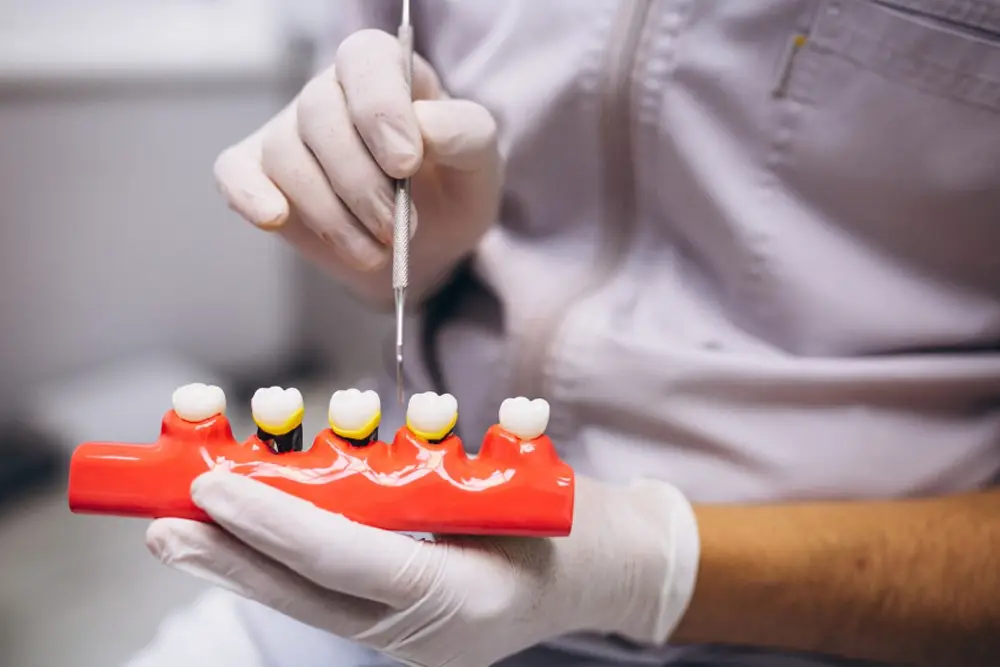
Gums, also referred to as ‘gingiva,’ are a firm, protective layer made of pink tissues, covering the tooth roots and jaw bones. By this covering, it not only prevents food debris or harmful bacteria from entering the roots, but it also serves as a support to strongly hold the tooth from the roots.

Understanding Gum Disease

Gum disease can arise due to multiple reasons—poor oral hygiene (irregular or improper brushing), plaque formation (a bacterial, filmy layer or acid deposits), unhealthy lifestyle (smoking or tobacco consumption), hormonal functions, or medications (side effects). Be it any cause, this gum disease starts affecting the gums, making them tender, reddish, swollen, and bleeding. Certainly, while the early stages of gum disease are treatable and curable, the late stages are irreversible (surgical tissue replacement is feasible only at times).

(i) Symptoms of Gum Disease

1. Early Signs
  • Swelling or redness
  • Painful gum tissues
  • Bleeding while brushing
2. Advanced or late signs
  • Bad breath
  • Pus formation
  • Loosened teeth
  • Shrinked tissues
  • Purple colored tissues

(ii) Is it Curable?

Well, whether the disease is curable or not depends on how early we diagnose it. Thus, if you ask us, “Can gum disease be cured?” our honest answer would be yes and no.

The early stage of the disease is called gingivitis; we can treat it and cure it. On the other hand, the latter or advanced stage of the disease is called periodontal, and it isn’t curable and irreversible. But it can be controlled with severe treatments or surgeries.

Treating Gingivitis and Periodontal Disease

The early gingivitis is mostly non-surgical. Scaling (step 1) and root planning (step 2) are the most sought-after treatments and involve deep cleaning up to the roots. This process removes the bacterial film, tartar formation, or acidic deposits. In the case of late periodontal disease, the effects are controlled with laser therapy, gum or bone grafting, pocket reduction surgery, etc.

Notably, these require gum specialists who are skilled in handling gum or gum-related issues. They are also called Periodontists.

Where can this Disease be Treated in Missouri?

Getting your gum disease treatment in Arnold, MO is now easy with the leading orthodontic center—Pristine Dental Care and Orthodontics, located at 6 Municipal Dr. They are a team of expert dentists and orthodontists who have experience treating early and late stages of this disease.

Steps for preventing this disease

  • Regular and thorough cleaning of your teeth and gums.
  • Brushing and flossing at least twice a day (morning and night).
  • Strictly adhering to scheduled dental checkups.
  • Immediate dentist visit in the case of early symptoms or signs.

Prevention is better than a cure. That is why people need to focus more on the preventive steps rather than checking “Can gum disease be cured?” So, wait no longer. Start your preventive steps, be consistent, and maintain healthy gums and teeth. If you have doubts, book your first consultation with them and then take the call.

Recents Blogs

Dental Implants
April 21, 2026

How Dental Implants Improve Oral Health

Losing a tooth can affect more than the way you look. It can change the...

Know More
Teeth Discoloration
April 15, 2026

Why Are My Teeth Discolored?

In general, tooth discoloration or stains can have several causes, and not all individuals experience...

Know More
Twwth Whitenig vs Veneers
April 09, 2026

Whitening vs. Veneers Which Option Is Best for You

People usually choose teeth whitening when they want a bright smile without actually changing their...

Know More
Dentures
March 16, 2026

How Many Hours a Day Should I Wear My Dentures?

According to most dentists, the recommended period of time to wear dentures each day would...

Know More