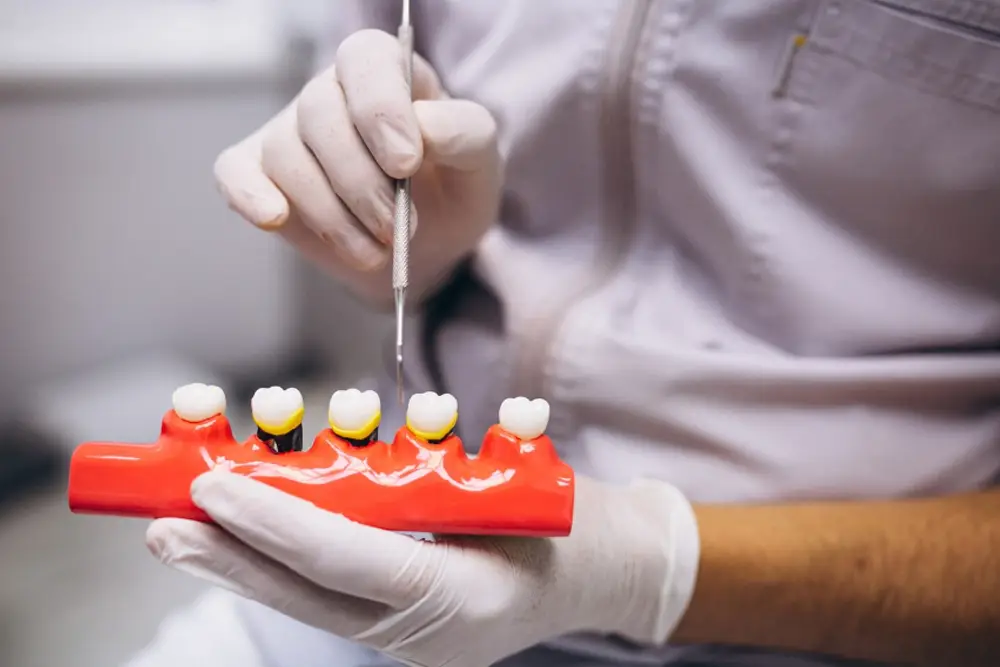
How Dental Implants Improve Oral Health

Quick Answer:

Dental implants improve oral health by preventing jawbone loss, supporting surrounding teeth, reducing the risk of gum disease and restoring full chewing function. They are the only tooth replacement option that actively integrates with your bone and protects your long-term oral health. Unlike dentures or bridges, a well-placed implant can last 15 to 25 years with routine care.

Losing a tooth can affect more than the way you look. It can change the way you eat food, speak to people and take care of your teeth and mouth. Over time if you do not do anything about the missing tooth it may even lead to losing bone and having gum problems. Dental implants are a solution that can help you for a long time. They do more than just replace missing teeth. They also help keep your mouth healthy.

Something most people do not realise: When a tooth is lost the jawbone in that area begins to shrink within 12 months because it no longer has a root stimulating it. Over several years this bone loss can change the shape of your face and make it harder to fit dentures. Dental implants are the only tooth replacement that prevents this from happening.

How Dental Implants Improve Oral Health

What Are Dental Implants?

Dental implants are like posts that are made of titanium. They are put into your jawbone to replace the roots of missing teeth. Once they become a part of your bone they provide a base for things like crowns, bridges or dentures.

Because dental implants become a part of your bone they work and feel like your own teeth.

The process of the implant fusing with your jawbone is called osseointegration. It takes between 3 and 6 months and it is what makes dental implants feel so natural. Once osseointegration is complete the implant behaves exactly like a real tooth root, it absorbs biting pressure, stimulates the surrounding bone and holds the replacement tooth securely in place without affecting any of the teeth next to it.

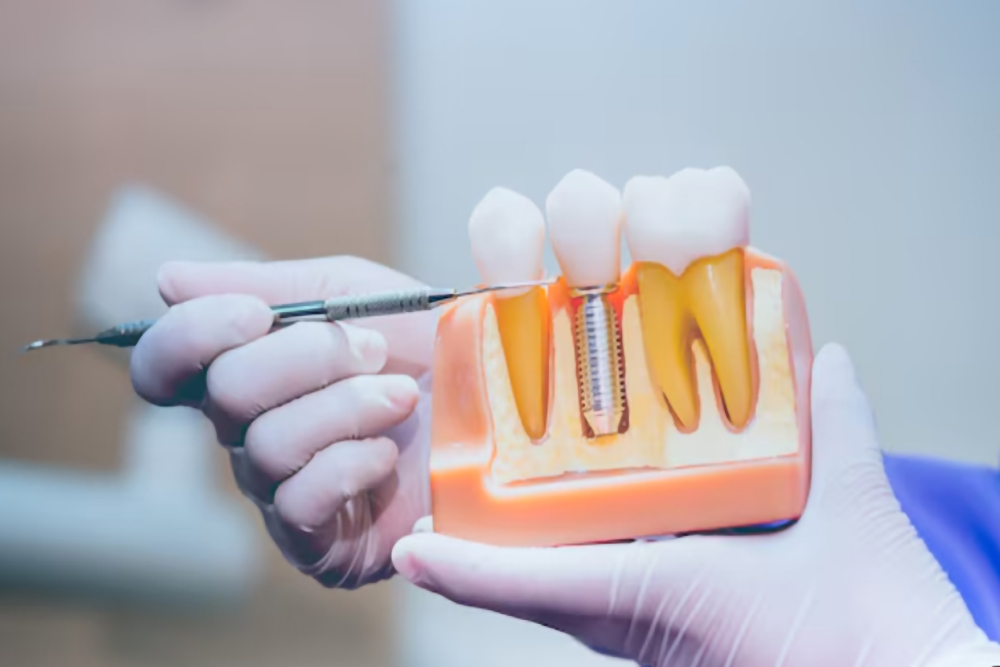
How Dental Implants Can Help You Have Better Oral Health

Dental implants can help you have oral health in many ways. Here is what changes once an implant is in place and healed:

They help keep your jawbone strong and prevent it from losing bone

The titanium post acts like a natural tooth root, stimulating the bone every time you bite or chew. Without this stimulation the bone begins to shrink within 12 months of losing a tooth.

They help you chew food and speak clearly

Implant-supported crowns withstand the same bite force as natural teeth. You can eat the foods you love without discomfort, restriction or the worry of something shifting.

They make it easy for you to take care of your teeth and mouth

You brush and floss implants exactly like natural teeth. There are no special cleaning solutions, no removal at night and no adhesives involved.

They lower the chance of having gum disease

Unlike dentures that can trap food against the gumline, implants sit flush with the gum and do not create hidden pockets where bacteria accumulate and cause infection.

They help keep the teeth around them strong and healthy

When a tooth is missing the neighboring teeth gradually shift into the gap. An implant keeps everything in position and means the adjacent teeth do not need to be filed down or altered as they would be for a bridge.

They can last for a long time if you take good care of them

With regular brushing, flossing and dental visits most implants last between 15 and 25 years. Many patients keep them for life. The implant post itself is designed to be a permanent fixture.

Clinical note: According to the American Dental Association, dental implants have a long-term success rate of over 95% at 10 years. This makes them one of the most reliable restorative procedures available in modern dentistry.

Types of Dental Implants

Endosteal Implants

Endosteal implants are put directly into your jawbone. Most people get this type of implant. They provide the strongest foundation and are suitable for patients with healthy, adequate jawbone density.

Subperiosteal Implants

Subperiosteal implants are put above your jawbone but under your gums. This type is used when your jawbone is not strong enough to support a standard implant directly.

Your dentist will tell you which type is best for you based on the condition of your mouth. If your jawbone has already experienced some bone loss your dentist may recommend a bone graft before placing the implant. This is a minor procedure that rebuilds the bone structure and creates a stable foundation. It adds a few months to the overall timeline but it makes implant placement possible for patients who were previously told they were not candidates.

Not sure which type of implant is right for you?

Ask Our Dentist Today

What Happens When You Get Dental Implants?

1. Consultation and planning

You have a meeting with your dentist to talk about what you need. Your dentist will examine your mouth, take X-rays and create a personalised treatment plan based on your oral health and bone density.

2. Implant placement

Your dentist places the titanium post into your jawbone under local anaesthesia. The procedure takes about 1 to 2 hours. Most patients are surprised by how comfortable the experience is.

3. Healing and osseointegration

You have to wait for a while for the bone to heal and become strong. This process takes 3 to 6 months. During this time the implant fuses with your jawbone, forming a secure permanent foundation.

4. Crown or restoration placement

Your dentist puts the dental crown or denture on the implant post. The crown is custom-made to match the colour and shape of your existing teeth so the result looks completely natural.

It takes some time. The result is worth it. You get a tooth that looks and feels natural. It helps you eat and speak well. Some people compare implants to dentures and dental bridges. Dental implants are better because they help keep your bones strong and your mouth healthy.

Dental Implants vs Dentures vs Bridges - Side by Side

Here is a clear comparison of all three options so you can understand exactly what makes implants different:

Feature Dental Implants Dentures Dental Bridges
Prevents Jawbone Loss ✓ Yes ✗ No ✗ No
Looks & Feels Natural ✓ Yes Partially ✓ Yes
Affects Neighboring Teeth ✗ No ✗ No Yes — requires grinding
Removed at Night ✗ No ✓ Yes ✗ No
Requires Adhesives ✗ No Often yes ✗ No
Care Routine Brush & floss normally Remove and soak nightly Special floss required
Average Lifespan 15–25 years 5–8 years 10–15 years
Long-Term Cost Higher upfront, lower long-term Lower upfront, higher long-term Moderate

Who Can Get Dental Implants?

Most adults with missing teeth can get implants. You are a candidate if you have healthy gums, strong bones and take good care of your teeth.

Even if you have lost some bone your dentist can do things to help you get dental implants.

In general good candidates for dental implants are adults who are in reasonable overall health. Smoking can slow down the healing process so patients who smoke are advised to quit before treatment. People with conditions like uncontrolled diabetes may need to manage their health before proceeding. Your dentist will review your medical history at your consultation and let you know honestly whether implants are suitable for you at this time.

Why Dental Implants Are Worth It

In the end dental implants do more than just replace missing teeth. They help keep your bones strong, your gums healthy and make it easy for you to take care of your teeth.

If you want a solution that's strong and feels natural, dental implants can help you get your smile and confidence back.

What makes implants different from every other option is that they work with your body rather than around it. They stimulate your bone, support your gums, and let you eat, speak and smile without thinking twice about your teeth. For most patients the investment pays for itself many times over in the years that follow.

Frequently Asked Questions About Dental Implants

Most people do not feel pain when they get dental implants because local anaesthesia is used to numb the area completely. After the procedure you might feel some soreness and mild swelling but it goes away within 3 to 5 days. Most patients find it more comfortable than a tooth extraction. Over-the-counter pain relief is usually enough to manage any post-procedure discomfort.
The full dental implant process typically takes 3 to 9 months from start to finish. Your bone needs 3 to 6 months to heal and become strong through osseointegration before your dentist can place the crown or denture on top. If bone grafting is needed before implant placement the overall timeline may be a little longer. Your dentist will give you a personalised timeline at your first consultation.
You take care of implants just like you take care of your natural teeth. Brush them twice daily, floss them once daily and go to your dentist for regular checkups every 6 months. Avoid biting down on very hard objects like ice or hard candy as this can damage the crown. With consistent care your implant can last 15 to 25 years or longer.
Yes, dental implants are often considered the better long-term solution because they are strong and help keep your bones healthy, and unlike bridges they do not need adjacent teeth to support them. Dentures can slip and require adhesives while bridges require grinding down healthy neighboring teeth. Implants do none of these things. They are the only tooth replacement that prevents jawbone loss and functions exactly like a natural tooth.
Dental implants can last 15 to 25 years and many patients keep them for life with the right care. The titanium implant post itself is designed to be permanent. The crown on top may need to be replaced after 10 to 15 years depending on wear. Overall implants have a much longer lifespan than dentures which typically need replacing every 5 to 8 years.
Dental implants have a success rate of over 95% at 10 years according to clinical research. This makes them one of the most reliable restorative dental procedures available. Success depends on good oral hygiene, overall health and regular dental visits. Patients who do not smoke, have healthy gums and maintain routine checkups tend to see the best long-term outcomes.
Coverage varies depending on your dental insurance plan. Some plans cover a portion of the implant procedure while others do not cover implants at all. However many dental practices including ours offer flexible payment plans that make implants more accessible. We recommend calling your insurance provider to understand your specific coverage before your consultation.
Dental implants may not be immediately suitable for patients with uncontrolled diabetes, active gum disease, significant bone loss without grafting or those who are heavy smokers. Teenagers whose jawbones are still developing are also not typically candidates. However many of these situations can be addressed before treatment. Your dentist will assess your individual situation and advise the best path forward for you specifically.

Recents Blogs

Root Canal
October 18, 2026

Is a Root Canal Really Painful? What to Expect, Recovery, and How It Saves Your Natural Smile

If you’ve been experiencing a sharp ache while biting down or persistent sensitivity when drinking...

Know More
Dental implant model used to explain signs of a dental implant infection
October 10, 2026

Signs of a Dental Implant Infection: Symptoms, Causes, and Treatment

Dental implant infection can cause red, swollen, or bleeding gums, persistent discomfort, pus around the...

Know More
How Long Does a Root Canal Take
October 03, 2026

How Long Does a Root Canal Take?

A root canal typically takes 30 to 90 minutes per appointment, depending on the tooth's...

Know More
How Long Does Dental Bonding Last
September 25, 2026

How Long Does Dental Bonding Last?

If you are considering dental bonding to repair a chipped tooth, close a small gap,...

Know More