Who is a Good Candidate for Dental Implants

A missing tooth can impact far more than your smile. It can make everyday activities like chewing and speaking more difficult, affect your confidence, and lead to gradual jawbone loss over time. Dental implants act as artificial tooth roots, restoring function while helping preserve and support the surrounding bone.

Because they closely mimic the look, feel, and function of natural teeth, dental implants are often considered one of the most reliable and long-lasting tooth replacement options.

Who is a Good Candidate for Dental Implants

What is a Dental Implant?

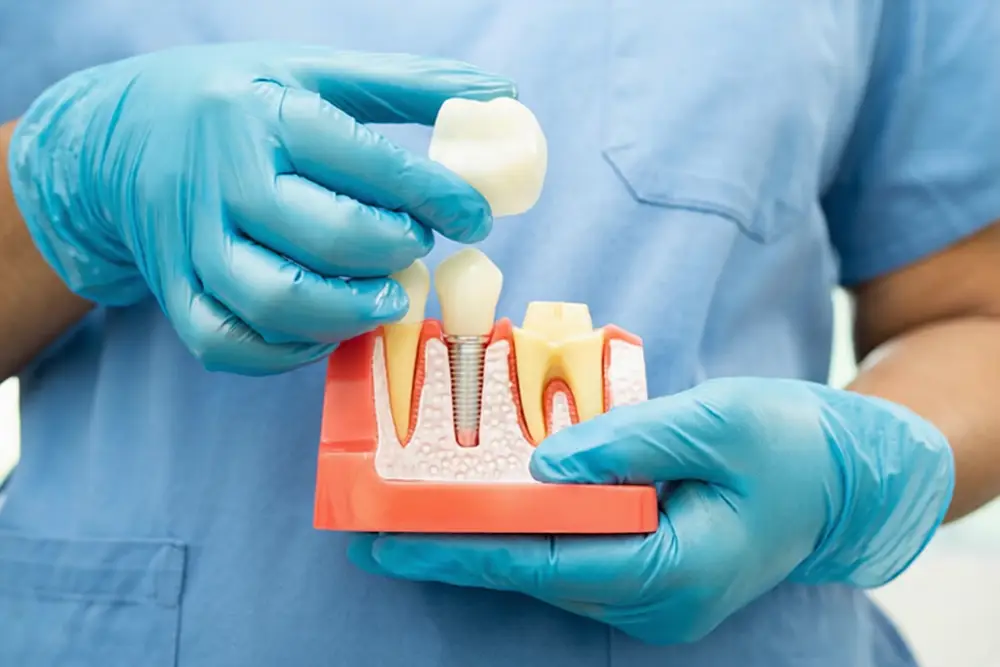
A dental implants is a permanent tooth replacement solution designed to look, feel, and function like a natural tooth. It consists of three key components:

  • Implant post - A titanium screw placed in the jawbone to act as an artificial tooth root.
  • Abutment - A connector that attaches the implant post to the crown.
  • Crown - The custom-made visible tooth that restores the appearance and function of your smile.

The Implant post component is the part that goes into the bone and acts as the root of the missing tooth. It is made of titanium, which bonds to the bone; this process is called osseointegration. The abutment is attached to the implant post, and the crown is attached to the abutment. The crown is processed to look like your neighboring teeth and blend in naturally. Once healing has occurred, the implants should remain fixed in place, with no movement when speaking or eating.

Candidacy requirements

Gums

If your gum health is poor, your chances of implant success are diminished. Any gum disease (infection and inflammation) is treated before implant placement.

Bone Level & Quality

If you lose a tooth, the jawbone begins to resorb (lose bone height, width & density) as it is not receiving pressure from chewing. Measurements are taken using scans or x-rays, and those with reduced height and width may undergo a procedure called a bone graft, in which new bone is grown in the area.

Oral Hygiene

The way you care for your teeth every day can affect the long-term results. As plaque builds up and causes peri-implant disease, it can eat away at the bone & damage your implant.

Missing Tooth Pattern

Your dentist will discuss your needs with the radiographer and plan accordingly. Front teeth play an important role in appearance and back teeth are seen for heavy chewing force. Each implant plan will be set for each individual.

When Treatment Gets Delayed ?

Conditions like active gum disease need to be treated first, uncontrolled /unmanaged diabetes; smoking can impede the ability to heal; tooth grinding can damage the implants; cavity treatment near the implant site. Please ask your dentist for more information before proceeding with treatment.

If someone is having treatment, these are things you may need prior to being suitable for treatment:

  • Gum conditions or gum infection needs to be treated prior to having implants.
  • Bone absent or thin may require a graft to be made available so that an implant can be placed.
  • Cavity filling to prevent further infection prior to surgery.
  • Smoking should be kept to a minimum or stopped before surgery.
  • Control of conditions like diabetes can aid long-term success.
  • A night guard can be made to prevent damage from grinding.

Benefits of Dental Implants:

  • The implant is fixed in place so you can eat and speak comfortably
  • Improved speech & chewing ability compared to dentures
  • Less bone loss in the jaw
  • No support needed from adjacent teeth
  • Chewing forces don’t affect any other teeth
  • Revamp of facial structure
  • Long-lasting solution
  • Improves confidence and enhances quality of life

Frequently Asked Questions

Will having gum infection prevent me from having an implant?

Yes. Infection must be treated before treatment, but after healing you can still have an implant if the level & fit are stable.

How long do dental implants last for?

Dental implants can last between 15 and 25 years or longer. Many last for a lifetime, with the crown being replaced due to natural wear. Good hygiene and regular checkups with your dentist can enhance your dental health and the longevity of your teeth.

What if there is not enough bone to place an implant?

A bone graft can be used to rebuild the parts of the jawbone missing. The graft takes to the existing bone, giving the periodontist something to work with. Once a graft has integrated fully, the implant can be placed.

Recents Blogs

How Many Dental Veneers Do You Actually Need
June 16, 2026

How Many Dental Veneers Do You Actually Need?

Quick Answer: Most patients need 6 to 8 dental veneers for a full smile transformation....

Know More
Do Baby Teeth need fillings
June 05, 2026

Do Baby Teeth need fillings?

Fillings will be required for baby teeth when decay reaches the inner layers of the...

Know More
Alternative to a dental crown
May 18, 2026

What is the Alternative to a Dental Crown?

Dental crowns are customized cap-like structures placed on cracked, chipped, or otherwise damaged teeth. By...

Know More
Dental bonding with braces
May 12, 2026

Can You Get Dental Bonding with Braces?

Those who want to straighten their teeth with braces may also be considering making their...

Know More